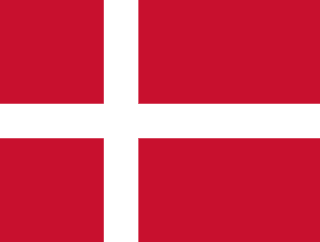
Denmark
The average IQ in Denmark is 97.94, putting the country slightly below the worldwide average of 100. This score means Denmark stands just over 2 points under the global average; yet, the nation continues to show strong overall cognitive performance due to its well-established social systems.
The national environment in Denmark inclusive schooling from early childhood, widespread digital literacy, and an emphasis on collaborative problem-solving and independent thought, fuels cognitive growth.
Public services, social equality, and cultural values that promote lifelong learning further strengthen the country's overall cognitive and analytical profile.
Although Denmark's measured IQ score is below the global average, the country is held in high regard for continually producing highly skilled, innovative, and analytically able citizens with strong institutions and a deeply ingrained commitment to social and educational development.
Country Statistics 6 keys IQ-related statistics
Free IQ Test
Start your IQ test now
Factors Influencing IQ Levels in Denmark
Several interconnected factors contribute to an average IQ of 97.94 in Denmark, reflecting influences of its educational framework, social model, healthcare services, and cultural environment.
Educational Quality and Child-Centered Learning
Denmark’s education system prioritizes creativity, analytical thinking, and student autonomy rather than strict memorization. Schools emphasize discussion-based learning, critical reasoning, and practical problem-solving.
Environmental Quality
Denmark ranks highly for air quality, access to green spaces, and clean water. Research shows that healthy physical environments can improve cognitive function and reduce developmental delays in children.
Socioeconomic Equality and the Nordic Welfare Model
There is a minimization of inequality in access to educational and developmental resources across regions. The uniformity of socioeconomic conditions lessens disparities that usually affect cognitive performance, and hence leads to the stabilization of the national intellectual profile.
Lifelong Learning and Adult Education
Denmark encourages continuous learning and upskilling throughout life. Adult education programs, vocational training, and public access to libraries contribute to cognitive stimulation across age groups, supporting sustained national IQ levels.
Multilingual Exposure and Global Integration
While Danish is the primary language, proficiency in English is widespread, and many students learn additional languages. Research shows that bilingual and multilingual exposure enhances executive functioning and mental flexibility, supporting cognitive performance at a national level.
How Denmark’s IQ Compares to Other Countries
With a national IQ of 97.94, Denmark falls modestly below the average globally but squarely in the range of many developed Western countries.
In Europe and other developed nations, Denmark aligns qualitatively with countries that have similar social infrastructure and educational standards, such as France (101.42), the Netherlands (99.72), and Austria (99.65), many of which report national IQs within a similar band.
While Denmark is not among the countries with the highest IQ averages (it ranks 56th globally), social and educational stability there provides a guarantee of uniform intellectual competencies.
How Denmark’s IQ Compares to Its Neighboring Countries
Denmark is part of a regional group along with Germany (99.64), Sweden (98.49), and Norway (98.52), which are also endowed with high levels of education, strong welfare systems, and the best standard of living in Europe.
Compared with these neighbors, the average Danish IQ is competitive, though some - notably Norway and regions of Germany - tend to report a little higher or at least similar national cognitive-performance indicators.
However, shared Nordic social models, multilingual environments, equity in social services, and access to quality education help ensure cognitive performance remains relatively balanced within the region.
These differences tend to be small between these neighboring countries, and structural factors like welfare, early‑childhood support, and educational inclusivity play more important roles than minor numerical differences.