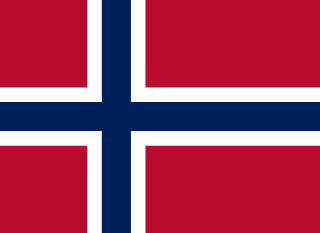
Norway
Norway's average Intelligence Quotient (IQ) is 98.52, positioning it below the global average of 100. This means Norway sits just slightly below that middle point, which can raise questions about what the number really means for a country known for its high quality of life and strong education system.
The reasons for this score are specific to how Norway works as a society. Its schools focus less on memorization for tests and more on teamwork and real-world problem-solving. The culture values balance, outdoor life, and practical skills as much as, if not more than, pure academic ranking. This means Norwegians develop intelligence in a way that might not always show up directly on a standard IQ test. To understand the score, you first need to look at the unique society behind it.
What is the Average IQ in Norway? Key Facts
- National IQ Score: 98.52
- Global Standing: Slightly below the world average (100).
- Key Educational Model: The holistic Nordic system, prioritizing equity, collaboration, and critical thinking over standardized testing.
- Unique Social Factor: High levels of immigration and a deliberate cultural de-emphasis on academic ranking (janteloven).
- Economic Context: A high-wage, resource-rich economy that channels cognitive skills into applied engineering, public sector innovation, and sustainable management.
Country Statistics 6 keys IQ-related statistics
Free IQ Test
Start your IQ test now
Factors Influencing IQ Levels in Norway
Norway's education system operates on principles fundamentally different from those in nations with higher average IQ scores. The national curriculum emphasizes likestilling (equality), collaborative learning, and critical thinking over competitive testing and memorization. Formal academic grading is intentionally delayed until adolescence. Until then, schools focus on social skills, creativity, and the joy of learning itself.
This approach, supported by universally highly-qualified teachers, produces exceptionally balanced educational outcomes but does not specifically train for the types of analytical speed and pattern recognition emphasized in traditional IQ assessments. Norway's strong PISA results prove its education model works. This success shows it builds real-world skills that may extend beyond IQ measurements.
Demographic and Geographic Influences on National Metrics
Two uniquely Norwegian factors significantly influence the national average IQ. First, Norway's challenging geography, with a small population dispersed across vast rural and remote fjord communities, creates inherent difficulties in delivering perfectly uniform educational resources. While investment is substantial, some regional variation persists.
Second, Norway maintains one of Europe's most generous immigration and refugee resettlement policies. New arrivals, particularly those from conflict zones or under-resourced educational backgrounds, often require time for language acquisition and cultural adaptation.
This compassionate policy, while a cornerstone of Norwegian values, temporarily affects mean scores on assessments normed for native Norwegian speakers, reflecting integration rather than cognitive potential.
Cultural Values and the Nordic Concept of Intelligence
Norwegian society operates within a framework influenced by janteloven, which emphasizes community welfare, modesty, and collective success over individual distinction. This cultural norm translates into an educational and social environment that deliberately de-emphasizes high-stakes standardized testing and public academic ranking.
Average IQ in Norway is viewed broadly to include practical skills, emotional intelligence, social cooperation, and environmental stewardship, competencies that contribute massively to societal well-being but are not quantified by conventional IQ tests. This value system prioritizes producing capable, well-rounded citizens over maximizing a specific psychometric score.
Economic Structure and Cognitive Specialization
Norway's immense wealth, derived from sovereign wealth fund management and advanced maritime, energy, and engineering sectors, shapes its cognitive landscape. The economy offers abundant high-value careers in stable public sector roles and applied technological industries.
This structure channels national talent toward practical expertise, complex system management, and long-term strategic planning, skills crucial to maintaining Norway's exceptional quality of life and economic resilience.
The cognitive skill set rewarded and developed is one of applied innovation and sustainable governance, rather than the test-taking agility that correlates with higher IQ scores in more academically competitive societies.
How Norway’s IQ Compares to Other Countries
To understand Norway's average IQ of 98.52 better, we should compare it first to its closest neighbors and then to the wider world.
Norway's Place in the Nordic IQ Spectrum
When examined within its immediate region, Norway’s IQ of 98.52 fits squarely within the tight cluster of Scandinavian averages. It is nearly identical to Sweden (98.49) and Denmark (97.94), and closely aligned with Iceland (99.99).
Finland (100.3) stands slightly above this group. This consistency reveals a shared Nordic profile, where minor variations are less significant than the common high-investment social and educational models.
Where Norway Stands Globally
Globally, this cohesive Nordic average sits below top-ranking East Asian countries like Japan (106.4) and Singapore (105.1). This gap highlights a fundamental divergence in societal and educational priorities. While some nations optimize for specific cognitive testing formats, the Scandinavian model prioritizes a broader set of outcomes.
The "Norwegian Paradox" of Success
Despite its regional-typical score, Norway consistently outperforms many higher-IQ nations in critical real-world benchmarks. It leads in areas like educational equity, student well-being, collaborative problem-solving, innovation indices, and the Human Development Index.
This creates the compelling "Norwegian paradox": a nation that creates one of the world's most successful societies not by maximizing a single psychometric score, but by building a holistic, practical, and inclusive form of national intelligence.
Average IQ in Norway is 98.52, which is a reflection of a sophisticated societal choice. The Norwegian model demonstrates that exceptional national outcomes, in education, innovation, and quality of life, can be achieved through a commitment to equity, holistic development, and social well-being over competitive academic intensity.
Ultimately, Norway exemplifies how a nation can integrate a strong base of cognitive ability with unique social values to create a form of national intelligence that is adaptive, innovative, and exceptionally effective in the modern world.